Sahy Uhns recently put together a mix entitled “Hot Mess Freak Out,” which is streaming now over at Impose Magazine. Check it out here (or stream below), along with a blurb about the new Sahy Uhns album, Courtship Dances.
“Courtship Dances” has morphed Sahy Uhns into an IDM hybrid that uses the intelligentsia textures as launchpads for his explorations of acid and deep house…Sahy Uhns’ “Hot Mess Freak Out” is 43 minutes of unwavering techno excavation that leaves few corridors unlit…Read more
Friday Night Presents: Sahy Uhns, “Hot Mess Freak Out Mix” by Impose Magazine on Mixcloud
Hot Mess Freak Out Tracklisting:
01 The Tuss, “Synthacon 9″
02 Robert Hood, “Chase”
03 Ben Klock, “Napoleon Hill”
04 Egyptian Lover, “The 808″
05 Phuture, “Your Only Friend”
06 Unknown
07 Tony Quattro, “Doubt (Squarehead Remix)”
08 Anders, “Tenfold”
09 Aoki Takamasa, “Degner”
10 Paul Vanderstukken, “Stay (Remix)”
11 Davide Squillace, “It’s All About The Toe”
12 Caz, “Cloze, Up, Over”
13 Huxley, “Body Talk”
14 The Aikiu, “Just Can’t Sleep (Egyptrixx Remix) (Sahy Uhns Edit)”
15 Gimmik, “Dutch Moment”
16 Klient, “Menel”
17 Dubfire, “Emissions”
18 Martin Solveig, “Poptimistic (Bingo Players Vox)”
19 DeMarzo, “When They Come for You”
20 NeonBlack, “Your Only Man”
21 M. Constant, “Cycles”
22 Costuleta, “Tchiriri (Instr)”
23 DJ Kito, “Mix 4 (Bonus Track Mix)”
24 Munchi, “Salgueiro O Calderao”
25 KMFH (Kyle Hall), “Finna Pop”

Last month, CMJ caught up with Proximal co-founder Sahy Uhns to discuss his second album, Courtship Dances (OUT NOW). Check out what CMJ had to say about the album and read through the Q&A while you stream Courtship Dances, here.
CMJ on Courtship Dances:
Every moment is significant on Courtship Dances; every pitch-shift or untethered beat stutter or low-end bass drag marks a change in the album’s dynamic.
Sahy Uhns on the narrative of the new album:
I often will write tracks to score memories or in parallel to a story I am creating in my head as I write. I make grander compositional arcs to carry the listener through from piece to piece and to balance out my tendency towards freeform and sometimes sporadic smaller compositional ideas. When someone listens to my records, I want them to be heard as one artistic statement, rather than a grouping of separate ideas….Read the full Q&A
Courtship Dances is available now on:
iTunes
Amazon
Bandcamp
Boomkat
Google Play
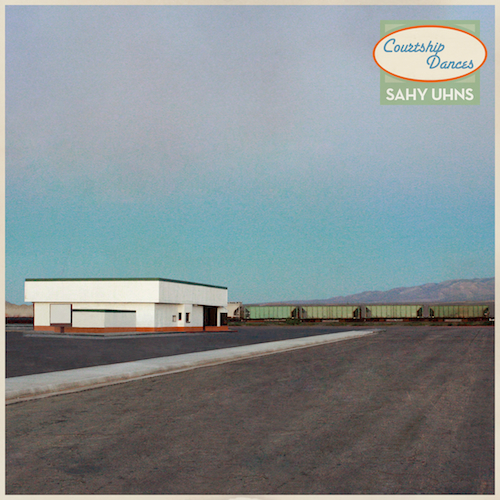
We’re excited to announce the release of Sahy Uhns’ second album, Courtship Dances, on November 4th. Courtship Dances is the follow up to Sahy Uhns’ debut record An Intolerant Disdain Of Underlings in 2011.
Tolerance Training: Part Two
The first track to be shared off of Courtship Dances was “Tolerance Training: Part Two” which debuted on XLR8R with these words from Glenn Jackson,
[“Tolerance Training: Part Two”] spends much of its five-minute run coyly shifting shapes from a cavernous dance track, to a more energetic house affair led by active (and even a touch funky) synth sequences and lined with an array of minute rhythmic details. An impressive feat of dancefloor evolution…Read the full review
J’ed(ed) / Chyme
The second track to be released from Courtship Dances was “J’ed(ed) / Chyme” which debuted on THUMP from managing editor Jemayel Khawaja who had this to say,
This tune comes out the gate as a raunchy, fidgetty heater and switches up into dystopian ghetto-tech beat now and again – but somewhere around the three minute mark, it devolves into a voided soundscape from which it never returns. The whole thing is an engrossing endeavor…Read the full review
To get an instant download of “Tolerance Training: Part Two,” PRE-ORDER the album on Bandcamp now.
The album will be out on Tuesday, November 4th in all major digital outlets and is currently available for pre-order on the following outlets:
PRE-ORDER
iTunes
Amazon
Boomkat
Google Play